


Anime TCG Merge Battle
4.1172.00 Reviews
App Specs
- Version
- 1.0.14
- Updated On
- License
- Free
- Downloads
- 100,000+
- Developer
- Gung Park
- Categories
- Card
- Platform
- Android
Screenshots
 Analysis by AppCompare
I approached Anime TCG Merge Battle as a game to dip into between other things, rather than one that demands a long, uninterrupted session. Its card-and-hero focus makes that an appealing prospect: there is a collection to shape and battles to work through, while merging gives progression a hands-on layer beyond simply adding new cards. The main question for me is whether those parts feel rewarding together. They can, especially if you enjoy making small roster decisions, but the game is a better fit for players who accept some uncertainty and repetition as part of collecting.
The Gameplay Experience
At its core, Anime TCG Merge Battle is all about strategy, timing, and a bit of luck. The main objective is to merge cards to evolve them and create a powerful deck to take on opponents. It’s like a chess game with animated characters and flashy effects. You start with basic cards, and as you win battles, you collect more cards to upgrade and enhance your deck.
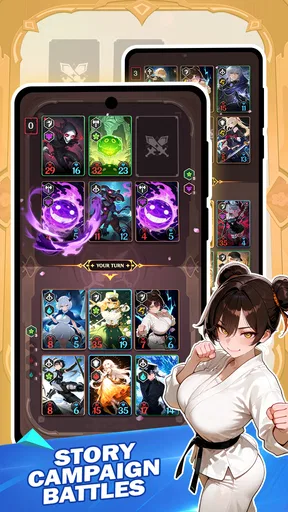
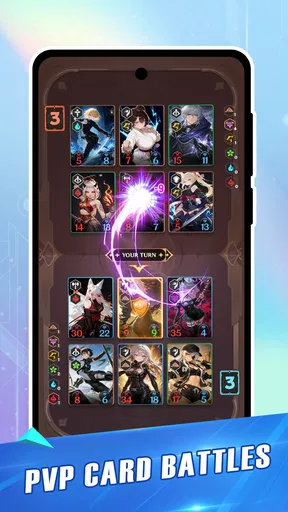
The battles themselves are pretty engaging. You get to unleash special abilities that can turn the tide in your favor. The animations are stunning, capturing the essence of anime with vibrant colors and dramatic energy bursts. I found myself getting lost in the visuals, which is always a good sign for a game trying to capture the anime aesthetic.
Quick sessions and sensible expectations
The game’s structure suggests a natural rhythm: check your collection, make a few choices about merges or deck changes, then take those decisions into battle. That makes it easier to imagine playing during a short break than settling in for a lengthy card-game session. I would still leave enough time to finish a match rather than opening it while waiting for something that could interrupt at any moment. The appeal is in seeing how a deck performs, not just tapping through a collection screen.
For a new player, the useful question is not only which card looks strongest, but what a merge costs in terms of flexibility. A stronger result can be tempting, yet a card that fits a particular role may be more useful than an upgrade that leaves the rest of the deck less coherent. I’d treat early choices as experiments: note what seems to work in a battle, then change one part of the deck at a time. That makes it easier to tell whether a result came from a merge, a new combination, or simply a different match.
Building Your Deck
Deck-building in this game is where your strategic skills come into play. Each card has unique abilities, and combining them effectively is the key to winning matches. I enjoyed the fact that you can customize your deck based on your playstyle. Whether you prefer a defensive approach or an all-out attack, there’s a strategy for you.
As you progress, the game challenges you to think critically about which cards to merge. Merging isn’t just about making cards stronger; it’s about creating the perfect synergy between them. This layer of strategy kept me hooked, trying to find the best combinations for maximum impact.
Worth Reading Before You Choose

EA SPORTS FC Mobile 26 Is a Bigger Football Game, but It Takes Time

Flipboard Shows What News Apps Must Do Beyond the Feed

Switching to Android Auto Means Rethinking Your Driving Routine

Google Calendar Makes a Crowded Week Easier to Manage

Ludo King Makes the Most of the Minutes Between Plans

Baby Panda World Brings Quick Play to Modern Phones, but Its Game Library Feels Busy
A practical habit helps here: before changing several cards, keep a mental note of the deck’s current purpose. If you are building around defense, for example, upgrading a card simply because it can be merged may pull the lineup away from that plan. I prefer to make one meaningful adjustment, test it, and only then decide whether to commit to another. It is a slower approach than merging everything as soon as the option appears, but it preserves choices while you are still learning which combinations suit you.
Social and Competitive Features
What’s a card game without a bit of competition? Anime TCG Merge Battle doesn’t disappoint. You can challenge friends or random players in PvP mode, which adds a competitive edge to the game. I found myself eagerly awaiting each match, strategizing my moves while anticipating my opponent’s tactics.
The game also features tournaments and events, which are a fantastic way to win exclusive cards and rewards. Participating in these events added an extra layer of excitement, as I wasn’t just playing for fun but also to earn some bragging rights.
Competition gives collection decisions a clearer purpose: a deck that feels comfortable against one opponent may need reconsideration when another player applies pressure in a different way. I would use PvP as a test of whether a strategy is understandable and consistent, not as proof that every loss means the deck is poor. A close match can reveal a useful weakness; a single result is less helpful than noticing the same problem across several battles. If you mainly want a relaxed solo card experience, the competitive layer may feel like an optional distraction rather than the main attraction.
Visuals, pace, and reliability
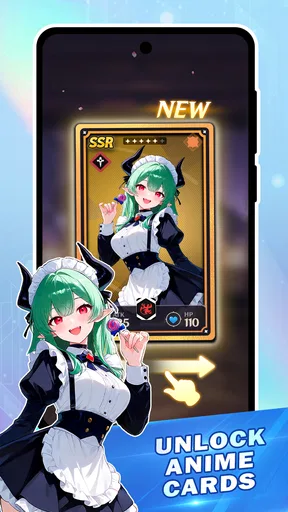
If you’re an anime fan, you’ll appreciate the game’s art style. The characters are beautifully designed, with that signature anime flair. The animations during battles are fluid and captivating, making each match a visual treat. The sound effects and music complement the action perfectly, enhancing the overall experience.
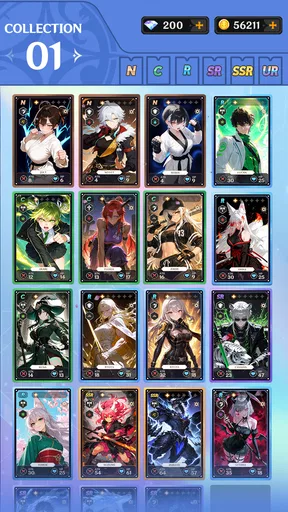
One thing that stood out to me was the attention to detail in the character designs. Each card has its own personality and style, which adds depth to the gameplay. It’s clear that the developers put a lot of effort into making the game visually appealing.
Flashy battle effects are part of the charm, but they also mean I would not choose this as a game to play carelessly while multitasking. Watching what happens matters when you are trying to understand why a combination succeeds or fails. If a call, commute stop, or other interruption breaks a session, I’d return by checking the current battle or menu before making another deck decision. That small pause is better than assuming the game has preserved the exact moment I left. I can’t infer a universal loading speed or stability level from the game’s presentation, so I’d judge it on the device and connection I actually use.
Who will enjoy the collecting loop
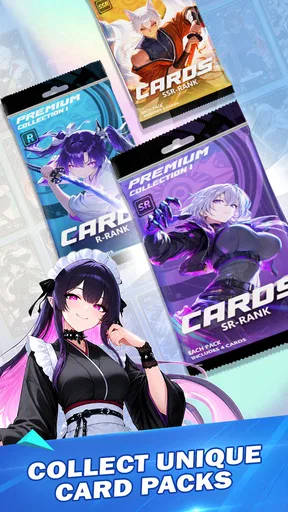
This is most appealing to someone who likes anime-styled characters and wants a card game where collection is tied to active decisions. The combination of merging, deck adjustments, and battles gives a collector more to do than simply open packs and admire the results. It can also suit a player who enjoys returning to a game in short bursts, provided they are comfortable with gradual progress and the element of chance that comes with gacha-style summoning.
It is less convincing for someone who wants a fully predictable competitive card game, a quiet single-player puzzle, or a collection that can be completed without uncertainty. Players who dislike random rewards may find summoning frustrating, while those who want every outcome to depend only on tactical skill may prefer a more traditional head-to-head card battler. I’d also skip it if anime presentation is not a draw; the visual identity is central to its appeal, not a minor decoration.
How it compares with other card games
Compared with a conventional trading-card game, the merge mechanic puts more emphasis on developing what you have rather than only assembling a list of separate cards. Compared with a simple idle collector, battles and deck choices give the player more direct responsibility for how a lineup performs. That middle ground is the game’s clearest identity: it offers collection and chance, but also asks you to think about synergy rather than treating every new card as an automatic improvement.
The trade-off is that it may not satisfy either extreme. A player who wants deep, highly transparent tournament strategy might find the gacha and progression loop less appealing than a rules-first card game. Someone looking for nearly hands-off collecting may find the battle and deck decisions more involved than expected. I’d approach it as a character-collection card game with tactical choices, rather than expecting it to replace a serious competitive TCG or a purely passive collector.
Everyday play and practical choices
A realistic way I’d fit it into a day is to open it during a quiet break, review which cards I have gathered, decide whether a merge supports my current deck, and play a battle or two. If I have only a minute, I would avoid starting a match; the more useful quick check is deciding what I want to test next. Later, when I have a little more time, I can play with that specific question in mind. This keeps the game from becoming a string of impulsive upgrades and makes each session feel connected to the last.
For someone new to the genre, the safest early approach is to learn the effect of the cards already in hand before chasing a particular ideal lineup. Keep the deck’s general plan simple, make a small change, and see what the battle teaches you. For an experienced card-game player, the adjustment is to remember that collection luck and merging can shape the options available; a theoretically perfect deck may not be practical with the cards you have. The fun is in adapting, though that same uncertainty can be a drawback if you want precise control.
In-App Purchases and Monetization
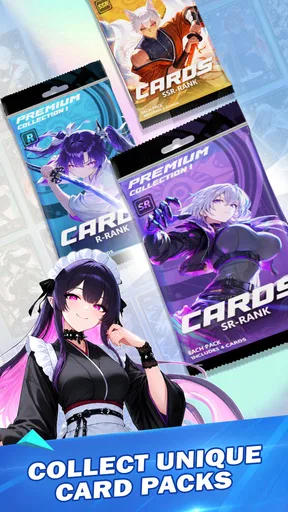
Like many free-to-play games, Anime TCG Merge Battle offers in-app purchases. These can help you progress faster by purchasing card packs or in-game currency. While it’s possible to enjoy the game without spending money, occasionally it feels like the game nudges you towards making a purchase, especially when you're stuck on a challenging level.
However, the game is generous with rewards, and daily logins and missions can help you gather resources without spending a dime. Patience can definitely be a virtue here if you prefer the free-to-play route.
The game is free to start, but its optional purchases span from $0.99 to $199.99 per item, so I would decide on a spending limit before buying anything. Gacha-style collection can make a new summon feel tempting, especially after a difficult battle, but I would separate the desire to improve a deck from the urge to chase a particular result. If you are happy to progress at your own pace, treat purchases as optional convenience rather than a requirement. If random rewards and high-priced purchase options make you uncomfortable, it is reasonable to avoid spending or choose a card game with a more direct progression model.
Who it suits, and what to check first
Gung Park’s game is listed as a free card title, and its current version is 1.0.6. It has an average rating of 4.2 from around 1.7 thousand ratings, with over 100 thousand installs and 73 written reviews. That gives a newcomer a useful sense that it has found an audience, but I would not treat popularity as a promise that every player will enjoy its mix of chance, merging, and competition.
The age rating is Everyone, and the minimum operating-system requirement is Android 7.0. If you are deciding whether it will suit your routine, think about more than compatibility: do you enjoy anime art, collecting, and making incremental deck changes? If yes, it is an easy game to try without an upfront purchase. If you want guaranteed card outcomes, a purely offline puzzle, or a tightly controlled competitive environment, a different style of card game is likely a better match.
Performance verdict
The colorful effects make battles look lively, but appearance alone cannot tell me how quickly the game loads, how stable it is on every device, or how much battery and memory it uses. I would not promise a particular level of smoothness across phones. On an older or less capable device, keeping other demanding apps closed is a sensible way to give a game with animated battles a fair test; if performance still feels uncomfortable, shorter sessions may be preferable to pushing through a long run.
My overall impression is that its strongest moments come from combining an anime-card collection with small but meaningful decisions about merges and deck synergy. The main friction is equally clear: progress involves chance, and competitive play can expose weaknesses that are not solved by collecting alone. I’d recommend giving it a try if you enjoy that balance and are comfortable with patient progression. I would pass if you need guaranteed rewards, minimal visual activity, or a card game where every advantage comes solely from strategy.
Overall, Anime TCG Merge Battle is a delightful mix of strategy and anime charm. Whether you’re a fan of card games or just looking for something new to try, this game offers a rich, engaging experience. With its stunning visuals, strategic depth, and competitive features, it’s easy to see why it’s capturing the attention of mobile gamers worldwide.
So, if you’re ready to dive into a world of anime battles and strategic card play, give it a try. It might just be the adventure you’ve been waiting for.
Pros
- Engaging card collection system.
- Visually stunning anime graphics.
- Strategic gameplay with depth.
- Regular updates and events.
- Smooth performance on most devices.
Cons
- Limited free deck options.
- In-app purchases can be costly.
- Occasional matchmaking issues.
- Requires constant internet connection.
- High battery consumption.
FAQs for Anime TCG Merge Battle
What is Anime TCG Merge Battle and how does it work?
Anime TCG Merge Battle is a mobile game that combines elements of trading card games (TCG) and strategic battles. Players collect cards featuring anime characters and use them to build decks. The game involves merging cards to enhance their power and strategically using them in battles against opponents. Users can enjoy both single-player campaigns and multiplayer challenges.
Is Anime TCG Merge Battle free to play?
Yes, Anime TCG Merge Battle is free to download and play. However, it offers in-app purchases for additional features, card packs, and other enhancements. While the game can be enjoyed without spending money, these purchases can provide a more enriched gaming experience and help progress faster.
What devices are compatible with Anime TCG Merge Battle?
Anime TCG Merge Battle is available on both Android and iOS platforms. It is compatible with most modern smartphones and tablets. To ensure optimal performance, it's recommended to have a device running Android 5.0 or higher or iOS 10.0 or later. Always check the app store for specific device requirements.
How does the card merging system work in the game?
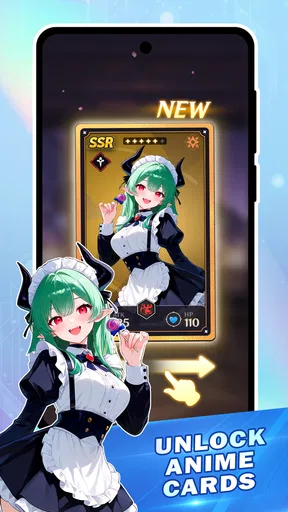
The card merging system in Anime TCG Merge Battle allows players to combine duplicate cards to create a more powerful version. Merging enhances the card’s stats, making it more effective in battles. This feature encourages strategic collection and utilization of cards, adding depth to the gameplay and offering a unique twist to traditional TCG mechanics.
Is there a multiplayer mode available in Anime TCG Merge Battle?
Yes, Anime TCG Merge Battle offers a multiplayer mode where players can engage in real-time battles against others globally. This mode provides a competitive edge to the game, allowing players to test their decks and strategies against diverse opponents. Multiplayer battles also offer rewards and rankings to motivate players to improve their skills.


